The Laboratory of Information and Measuring Systems was established in 2002 on the basis of the Institute of Automation, later renamed the Institute of Automation and Information Technologies.
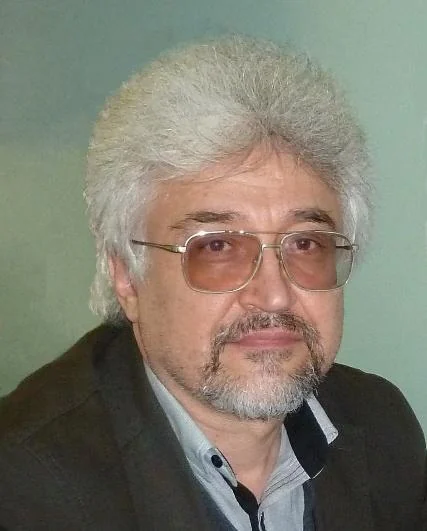
Since 2002 to the present time the laboratory is headed by Doctor of Science, Professor Bryakin I.V.
Contacts
Bryakin Ivan Vasilyevich
Head of Laboratory, Doctor of Technical Sciences, Professor
Application of geomagnetic and natural electromagnetic fields to solve geoecological monitoring problems
Ferrosound magnetometry (search for natural resources, detection of subsurface objects, navigation and orientation systems)
Linear and nonlinear radar
Algorithmic data processing in the form of time series
Radiotelemetry systems for access restriction and monitoring of technical facilities
Automated control of parameters of technological processes at enterprises of various industries
Information security and development of software and hardware means of information protection
Subsystems of biotic monitoring (assessment of the risk of epidemics or the spread of diseases of a certain type)
Development of hydro-automatic devices and methods of identification, modeling of water purification processes from sediments
Development of methods and models for identification of regime parameters of open watercourses
Key Research Results and Achievements
New principles for constructing geophysical field sensors based on the effects of low-frequency spin and magnetoelectric resonances have been developed.
A new principle of excitation of magnetically ordered structures of sensitive elements of ferrozod sensors has been developed.
A new principle for constructing a radio wave probing system has been developed.
A new concept of a multipath distributed EMEPZ source with a mobile impact has been developed.
A new principle of constructing a framework antenna based on the effect of spin-wave polarization has been developed.
The structure of a multiwavelet polymorphic network and the technology of forecasting non-stationary time series based on it have been developed.
Technologies for processing time series based on deep neural networks have been developed.
A method for determining the surface velocity of water has been developed.
A method of measuring the surface velocity of water based on the use of a physical picture of the forces acting on the mobile float sensor in the water flow has been developed.
A method for identifying the regime parameters of open watercourses in conditions of a shortage of initial information has been developed.
A method for identifying elements of a local isotropic flow in a turbulent water flow based on the observation of elements of a local isotropic flow in the laminar boundary layer has been developed and analytically substantiated.
A method for determining the high-frequency range of the pulsation spectrum of the vertical velocity component in the laminar boundary layer of the turbulent water flow is developed and analytically substantiated on the basis of estimating the size of the Taylor vortex and the dispersion of the vertical water velocity component.
Lead officers
Bryakin I. V. – Head of Laboratory, Doctor of Technical Sciences, Professor.
Bochkarev I.V. – Senior Researcher, Doctor of Technical Sciences, Professor (external part-time appointment)
Verzunov S.N. – Leading Researcher, Doctor of Technical Sciences
Presnyakov K.A. – Chief Researcher, Doctor of Technical Sciences, Senior Research Fellow
Askalieva G.O. – Senior Researcher, Candidate of Technical Sciences
Koryakin S.V. – Senior Researcher
Kasimova A.U. – Researcher
Pershakova E.Yu. – Lead Engineer
Dyachenko E.I. – Lead Engineer
Karakay Yu.I. - Lead Engineer
Zamay L.I. – Engineer
Publications
2016
Articles: Kerimkulova G.K. On the study of the properties of control systems based on the adaptive method // Problems of automation and control. – 2016. – No. 3(25) – S. 12-20.
Educational and methodological manuals: Kerimkulova G.K. Guidelines for the course "Fundamentals of Programming" / educational and methodological manual. Bishkek, 2016, 1 p.m.
2017
Articles: Kerimkulova G.K., Presnyakov K.A. Forecasting models in automation systems // Problems of automation and control. – 2017. – No. 2(28) – S. 45-52.
Educational and methodological manuals: Kerimkulova G.K. Workshop on the course "Informatics" / training manual. Bishkek, 2017, 1 p.p.
2018
Articles: Kerimkulova G.K., Karimova G.T. Analysis of Network Structures in Smart Systems // Problems of Automation and Control. – 2018. – No1(31) – P. 30-38.
Educational and methodological manuals: Kerimkulova G.K. Methodological recommendations for the implementation of laboratory work on informatics / educational and methodological manual. Bishkek, 2018.
2019
Articles: Kerimkulova G.K., Urmanbektova K.Sh. Application of the Internet of Things in Automated Systems // Problems of Automation and Control. – 2019. – No2(36) – S. 102-110.
Educational and methodological manuals: Kerimkulova G.K. Guidelines for the course "Internet of things" / educational and methodological manual. Bishkek, 2019.
2020
Articles: Kerimkulova G.K., Presnyakov K.A., Askaliyeva G.O. Methods of identification of mode parameters of control systems // Problems of automation and control. – 2020. – No3(40) – C. 50-58.
Educational and methodological manuals: Kerimkulova G.K. Workshop on the discipline "Informatics" / educational and methodological manual. Bishkek, 2020.
2021
Articles: Kerimkulova G.K., Karimova G.T. Overview of OSINT technologies and their practical application // Problems of automation and control. – 2021. – No1(43) – P. 90-98.
Educational and methodological manuals: Kerimkulova G.K., Karimova G.T. Methodical instructions for the implementation of practical works on informatics / educational and methodological manual. Bishkek, 2021.
2022
Articles: Kerimkulova G.K., Urmanbektova K.Sh. Development of a network for a smart home based on IoT // Problems of automation and control. – 2022. – No. 2(46) – S. 120-128.
Educational and methodological manuals: Kerimkulova G.K. Methodological recommendations for the implementation of laboratory work on the IoT / training manual. Bishkek, 2022.
2023
Articles: Kerimkulova G.K., Presnyakov K.A., Dastanbek uulu N. Analysis and optimization of control systems in IoT // Problems of automation and control. – 2023. – No1(48) – S. 75-84.
Educational and methodological manuals: Kerimkulova G.K., Karimova G.T. Workshop on IoT for students / tutorial. Bishkek, 2023.
2024
Articles: Presnyakov K.A., Kerimkulova G.K., Askaliyeva G.O. Structure of the method of non-traditional identification of regime parameters of open watercourses // Problems of automation and control. – 2024. – No1(49) – C. 25-31.
Kerimkulova G.K., Karimova G.T. Review and practical significance of OSINT technologies // Problems of automation and control. – 2024. – No. 2(50) – C. 105-113.
Kerimkulova G.K., Urmanbektova K.Sh., Dastanbek uulu Nurkambar. Analysis and development of a network for the Internet of things of a smart home // Problems of automation and control. – 2024. – No3(51) – S. 60-68.
Innovative development
Fluxgate Magnetometer with a Test-Based Operating Algorithm
Flux-Modulation Vibration Sensor
Building Structural Health Monitoring System
Local Domestic Heating System with Electronic Power Control
Portable Metal Detector
Automated System for Monitoring Process Environment Parameters at Industrial Facilities
TsIV Digital Moisture Meter
Instrumentation for Monitoring Process Parameters in Worsted and Knitted Fabric Production
Ferrozond magnetometers. Innovative development
Method for determining the surface velocity of water
Method for measuring surface water velocity
Method of identification of regime parameters of open watercourses in conditions of deficiency of initial information
Method for identifying elements of locally isotropic flow in turbulent water flow
Method for determining the high-frequency range of the pulsation spectrum of the vertical velocity component in the laminar boundary layer of the turbulent water flow
Method of determining the probable influence of the choice of orientation of the coordinate axes on the results of measurements of the kinematic characteristics of the open turbulent water flow